


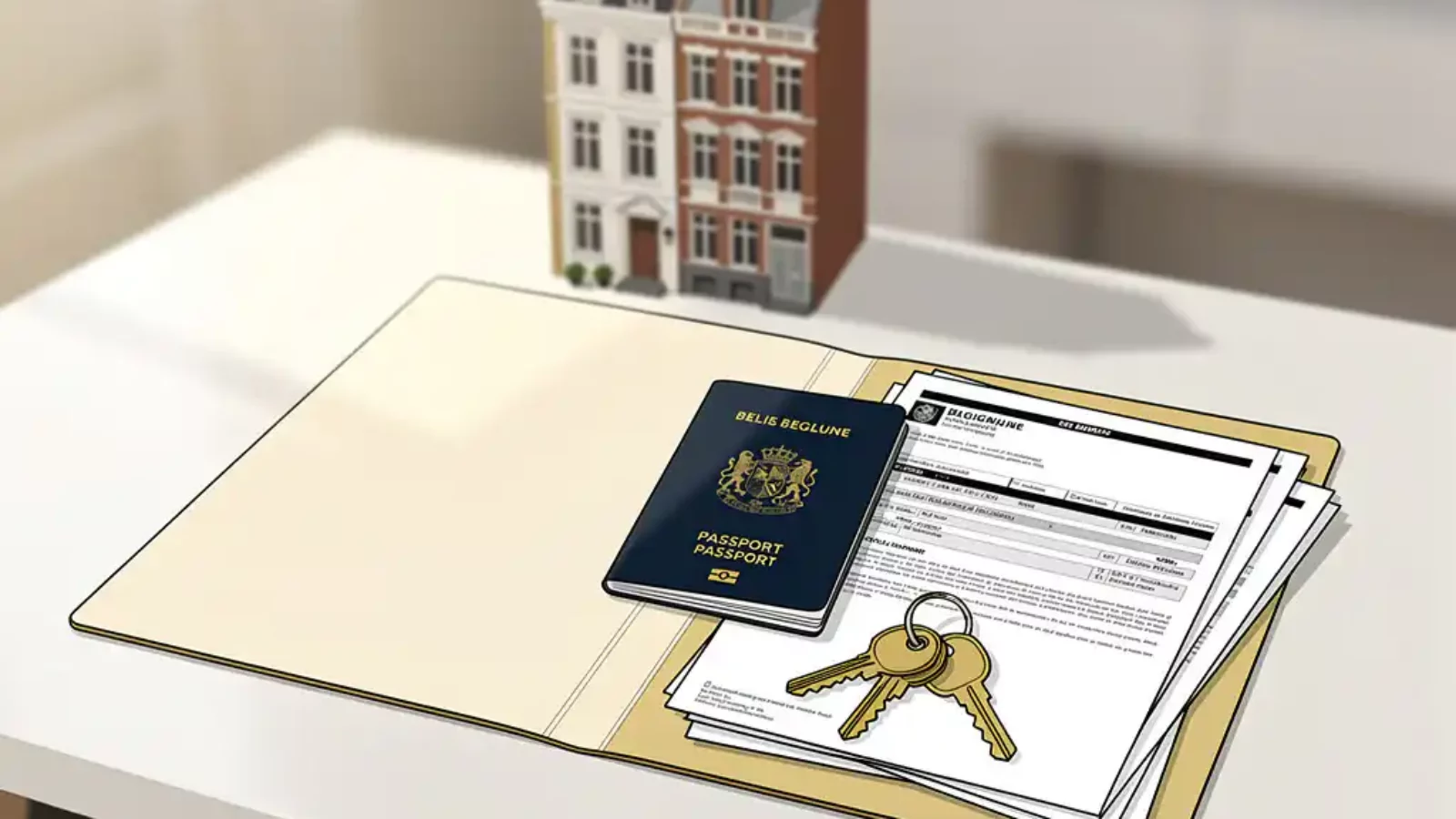
To rent an apartment in Belgium, you typically need to provide proof of identity, proof of income or financial stability, and references or a rental guarantee. The exact combination of documents depends on your situation, your landlord, and whether you are renting as a private individual or through a company. This article walks through the most common questions international professionals and expats have about rental documentation in Belgium.
Which documents do landlords in Belgium typically ask for?
Landlords in Belgium commonly request a standard set of documents to assess a prospective tenant’s reliability and financial capacity. While there is no single universal checklist, most landlords ask for proof of identity, recent proof of income, and sometimes a reference from a previous landlord or employer. The specific requirements can vary depending on the landlord, the property, and the rental agency involved.
In practice, the documents most often requested include:
- A valid passport or national identity card
- Recent payslips (often the last two or three months)
- A recent employment contract or letter of employment
- Bank statements as additional proof of financial stability
- A reference letter from a previous landlord or employer
- Proof of address in your country of origin (for new arrivals)
For furnished or serviced apartments aimed at international professionals, landlords and rental agencies often apply a more streamlined process. Because these properties are specifically designed for short-to-medium-term stays, the documentation process can be more flexible than in the traditional Belgian rental market.
Do expats and non-EU nationals need different documents?
Expats and non-EU nationals may need to provide additional documentation compared to Belgian residents or EU citizens. In particular, landlords often ask for evidence of legal residence or a work permit, since these confirm that the prospective tenant is authorised to stay and work in Belgium for the duration of the lease.
For EU nationals, a valid passport or national identity card is generally sufficient as proof of identity and residence entitlement. Non-EU nationals are often asked to provide:
- A valid passport
- A residence permit or visa documentation
- A work permit or proof of employment with an organization operating in Belgium
- A letter from their employer confirming the assignment and its duration
Diplomats, NATO staff, and Eurocrats often have institutional support that simplifies this process. Many international organisations provide official letters confirming employment status, which landlords and rental agencies typically accept as strong supporting documentation. If you are relocating through a relocation agency, they can often help you prepare and present your documents in a format that Belgian landlords recognise.
What proof of income is accepted when renting in Belgium?
Proof of income when renting in Belgium is most commonly demonstrated through recent payslips, an employment contract, or a formal letter from your employer. Landlords generally want to see that your monthly income is sufficient to cover the rent comfortably, though the exact threshold varies by landlord and property.
The following forms of income documentation are often accepted:
- Recent payslips: usually the last two to three months, showing a stable and regular income
- Employment contract: particularly useful for new arrivals who do not yet have Belgian payslips
- Employer letter: a formal statement confirming your position, salary, and the expected duration of your employment or assignment
- Bank statements: showing consistent income deposits over recent months
- Corporate guarantee letter: if your employer is covering or co-signing the rental agreement
For self-employed professionals or freelancers, landlords may ask for recent tax assessments or financial statements instead of payslips. If you are in the early stages of a new assignment and do not yet have local income documentation, a combination of an employer letter and bank statements from your home country can often bridge the gap.
Can a company rent an apartment on behalf of an employee?
Yes, a company can rent an apartment on behalf of an employee in Belgium. This arrangement is common for international assignments, corporate relocations, and situations where an employer wants to simplify housing for incoming staff. In this case, the company signs the rental agreement as the tenant and takes on the associated responsibilities.
When a company rents on behalf of an employee, landlords typically ask for:
- The company’s official registration details
- A signed letter of intent or corporate rental agreement
- Proof that the company is financially sound (such as recent accounts or a bank reference)
- Confirmation of the employee who will occupy the property
Corporate rentals are particularly well suited to furnished and serviced apartments designed for international professionals. These properties often come with all-inclusive billing, which aligns naturally with how companies manage employee housing costs. A single monthly invoice covering rent and services makes internal accounting considerably more straightforward for HR and finance teams.
What is a rental guarantee and how does it work in Belgium?
A rental guarantee in Belgium is a security deposit that a tenant provides to the landlord at the start of a tenancy. It serves as financial protection for the landlord in case of unpaid rent or damage to the property beyond normal wear and tear. The amount and conditions of the rental guarantee can vary depending on the agreement between the landlord and tenant.
In practice, a rental guarantee is often equivalent to one to three months of rent, though the specific amount is determined by the parties involved. Common ways to provide a rental guarantee include:
- A blocked bank account: the tenant deposits the amount into a dedicated account in their own name, where it remains blocked until the end of the tenancy
- A bank guarantee: the tenant’s bank provides a guarantee to the landlord without the tenant needing to tie up the full amount in cash
- A guarantee from an employer or organisation: in some corporate rental arrangements, the employer provides a written guarantee instead of a cash deposit
For expats arriving in Belgium without an established local bank account, setting up a blocked account can take time. This is one reason why corporate rentals or managed rental arrangements can be practical: the employer or rental agency may handle the guarantee on the tenant’s behalf, reducing administrative friction at the start of the assignment.
What happens if you are missing one of the required documents?
If you are missing a required document, the rental process does not necessarily come to a halt. In many cases, landlords and rental agencies are willing to accept alternative documentation or a temporary substitute, particularly when the overall application is otherwise strong. Communication and transparency are key: explaining your situation clearly often leads to a workable solution.
Some practical approaches when a document is unavailable:
- Ask your employer to provide a detailed letter confirming your position, salary, and assignment length as a substitute for payslips
- Offer additional bank statements to compensate for missing income documentation
- Request a corporate guarantee from your employer if you cannot yet provide a personal rental guarantee
- Work with a relocation agency that has established relationships with landlords and can vouch for your reliability
- Provide a reference from a previous landlord, even from outside Belgium
The more context you provide upfront, the easier it is for a landlord to make a decision. International professionals relocating for work are a well-understood profile in cities like Brussels, and experienced landlords and rental agencies are generally familiar with the documentation challenges that come with an international move.
How RentMore supports international professionals with housing in Belgium
For expats, Eurocrats, diplomats, and international professionals, navigating the Belgian rental market from abroad can feel overwhelming. RentMore is specifically set up to make this process as smooth as possible. With more than twenty years of experience in furnished and serviced apartment rentals in Brussels and beyond, RentMore works with international tenants, companies, and relocation agencies on a daily basis and understands the documentation challenges that often come with a cross-border move.
Here is what RentMore offers to simplify your rental experience:
- One point of contact: a single person who handles your questions, documentation, and move-in process from start to finish
- One monthly invoice: rent, utilities, and chosen services bundled into a single, clear bill that suits both individuals and corporate finance teams
- Flexible rental periods: starting from six months depending on the property, suitable for short assignments and longer relocations alike
- Corporate rental arrangements: companies can rent on behalf of employees, with documentation and billing structured accordingly
- Fully furnished, move-in-ready apartments: no need to arrange furniture, utilities, or services separately
Whether you are an individual professional preparing your rental application or a company arranging housing for an incoming team member, get in touch with RentMore to discuss your situation and find the right apartment for your needs.
Frequently Asked Questions
How far in advance should I start gathering my rental documents before moving to Belgium?
Ideally, you should start preparing your rental documentation two to four weeks before you begin actively viewing apartments. This gives you enough time to request employer letters, gather bank statements, and obtain any official translations if required. For non-EU nationals, it is especially important to confirm that your residence permit or visa documentation is up to date, as processing delays can slow down the entire rental application.
Do my documents need to be translated into Dutch, French, or German to rent in Belgium?
Not always, but it depends on the landlord, the region, and the type of property. In Brussels, which is officially bilingual, many landlords and rental agencies working with international professionals are comfortable accepting documents in English. For properties in Flanders or Wallonia, a landlord may prefer documents in Dutch or French respectively. When in doubt, providing a simple cover letter in the local language summarising your key documents can go a long way toward making a strong first impression.
What if I have just started a new job and only have an employment contract but no payslips yet?
This is a very common situation for international professionals relocating for a new assignment, and most experienced landlords in Brussels are familiar with it. A detailed employer letter confirming your role, start date, and salary — combined with bank statements from your home country — is typically accepted as a substitute for payslips. If your employer is willing to provide a corporate guarantee or co-sign the rental agreement, this can further strengthen your application and give the landlord the confidence they need to proceed.
Can I rent an apartment in Belgium before I have a Belgian bank account?
Yes, you can. Not having a Belgian bank account is a common challenge for new arrivals, and it does not automatically disqualify you from renting. Many landlords and rental agencies accept international bank transfers for the rental guarantee and monthly rent, particularly in the furnished and serviced apartment segment. If a blocked Belgian bank account is required for the rental guarantee, your employer or a relocation agency may be able to provide an alternative guarantee arrangement while you get your local banking set up.
Are there any common mistakes expats make when submitting a rental application in Belgium?
One of the most frequent mistakes is submitting an incomplete application without any explanation for the missing documents. Landlords are generally understanding when a situation is clearly communicated upfront, but unexplained gaps can raise concerns. Another common error is underestimating the importance of a strong employer letter — a detailed, official letter on company letterhead can compensate for many other missing documents. Finally, expats sometimes overlook the need to demonstrate legal residence entitlement, which is a standard check for non-EU nationals that should be addressed proactively in your application.
How does the rental application process differ for furnished versus unfurnished apartments in Belgium?
Furnished and serviced apartments, particularly those catering to international professionals, tend to have a more streamlined and flexible application process than traditional unfurnished rentals. Landlords of furnished properties are accustomed to working with expats, short-term tenants, and corporate clients, which means they are generally more experienced in handling international documentation. Unfurnished apartments aimed at long-term Belgian tenants may involve stricter income thresholds, more rigid document requirements, and less flexibility for applicants without local payslips or a Belgian financial history.
What should I do if a landlord rejects my application due to insufficient documentation?
First, ask the landlord or rental agency specifically which document was the deciding factor — this helps you address the exact gap rather than guessing. In many cases, a rejection can be reversed by providing a stronger employer letter, an additional bank statement, or a corporate guarantee from your employer. If you are consistently running into documentation barriers, working with a relocation agency or choosing a rental provider that specialises in international tenants — such as RentMore — can make a significant difference, as they already understand your profile and know how to present your application effectively.
Related Articles
- What should you budget for housing as an expat in Belgium in 2026?
- How do serviced apartments simplify housing for international professionals?
- What is the difference between temporary and long-term housing in Belgium?
- What is corporate housing and how does it work in Belgium?
- How do relocation agencies help expats find housing in Belgium?